Dignita Presents Analysis of Human Trafficking Vulnerabilities Among Young People Leaving Alternative Care
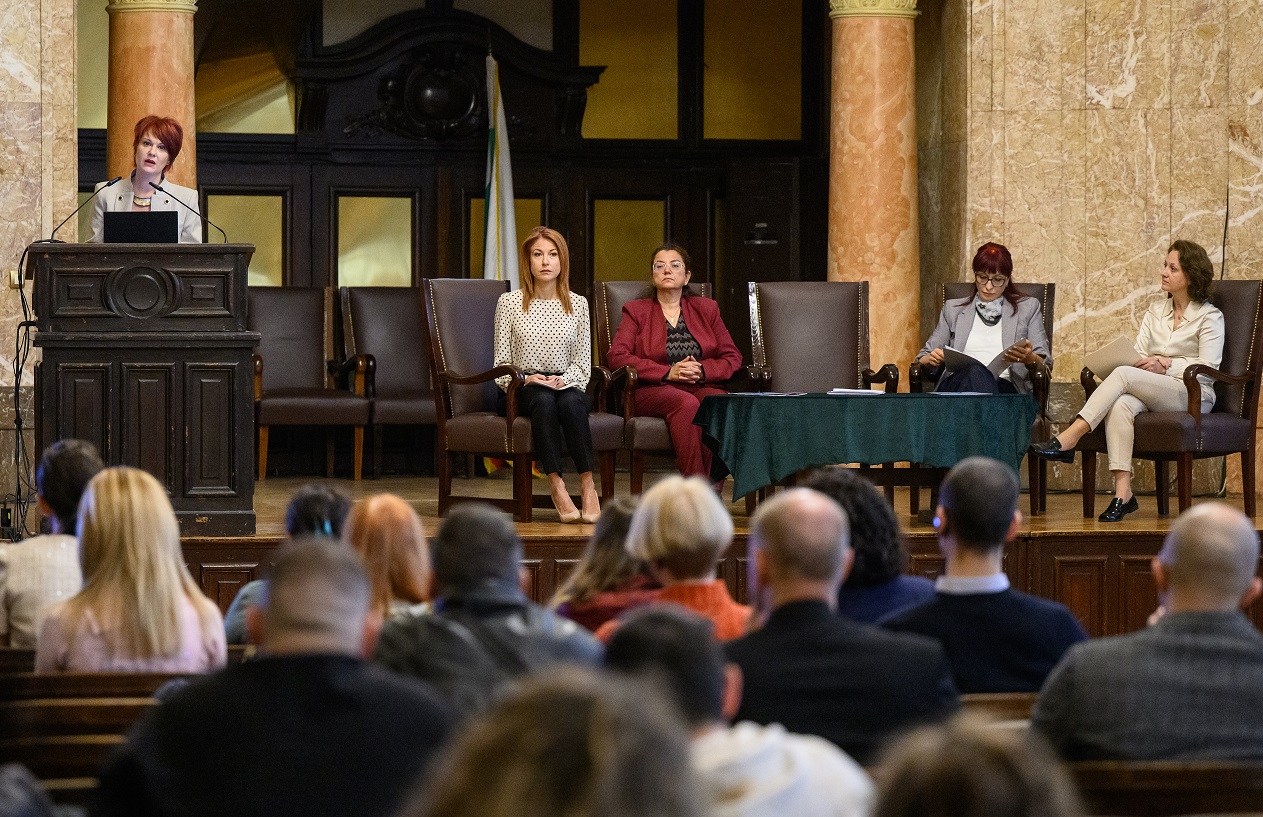
On 14 October 2026, Dignita Foundation held a conference in the Aula of Sofia University “St. Kliment Ohridski”, focusing on the prevention of human trafficking among young people leaving alternative care. The event took place ahead of the European Anti-Trafficking Day on 18 October and brought together representatives of public institutions, academia, and organisations working in social support and human rights protection.
During the conference, Dignita Foundation presented its analysis, “Young People Leaving Alternative Care: Vulnerability to Human Trafficking”, which examines the factors that increase the risk of exploitation during the transition from residential care to independent living. The report builds on the Foundation’s previous research from 2022, combining a review of policies and existing studies with insights from professionals working directly with children and young people. Read the full text of the report here.
The Transition to Independent Living Requires Support Beyond Leaving Care
The analysis shows that vulnerability to human trafficking does not stem from young people’s individual characteristics or “risky behaviour”. Instead, it develops through an accumulation of structural challenges and gaps in support, including a lack of stable housing and financial security, limited access to aftercare services, insufficient preparation for employment, and the absence of trusted people to turn to for help.
The period immediately after leaving alternative care is particularly critical. Young people must often secure housing, income, and employment simultaneously, without sufficient time, resources, or a reliable support network. Under these circumstances, offers of employment, financial assistance, or personal relationships can gradually become mechanisms of dependency and exploitation.
The report emphasises that trafficking prevention must go beyond providing information about human trafficking. It should also focus on developing practical skills for finding safe employment, understanding labour rights, managing personal finances, recognising controlling behaviour, and seeking assistance. Stronger coordination is also needed between the child protection system, social services, and anti-trafficking mechanisms.
Mentoring as a Pathway to Independent Living
The conference also presented the results of the pilot edition of the “Strong and Independent” mentoring programme, implemented by Dignita Foundation in partnership with Sofia University “St. Kliment Ohridski”. As part of the programme, Social Work students provide individual mentoring and support to young people preparing to leave residential care.
The programme takes a holistic approach to supporting the transition to independence, focusing on the development of life skills, confidence, and the ability to manage practical tasks and everyday challenges. Mentoring relationships can provide continuity and access to a trusted person at a time when institutional support is gradually reduced or comes to an end.
During the panel discussions, participants explored the role of mentoring in supporting a successful transition to independent living, as well as opportunities to ensure the programme’s long-term sustainability through partnerships between universities and social services.
From Analysis to More Sustainable Support
The report’s key recommendations include integrating trafficking prevention into preparations for leaving care at an early stage, providing continued support during the first months of independent living, and incorporating assessments of exploitation risks into individual support plans. The analysis also highlights the importance of long-term mentoring, which complements rather than replaces access to housing, social services, and employment support.
Dignita Foundation remains committed to preventing human trafficking and strengthening support mechanisms for young people leaving alternative care. A sustainable transition to independence requires both preparation before leaving care and consistent support afterwards, ensuring that young people have genuine opportunities to build safe and independent lives.
The analysis was developed within the project “Strong Together: Access to Rights and Empowerment”, implemented by Dignita Foundation with financial support from the Bulgarian Fund for Women under the “Strong” Programme. Dignita Foundation is solely responsible for the content, which does not necessarily reflect the official position of the Bulgarian Fund for Women.


Latest News:
Dignita Presents Analysis of Human Trafficking Vulnerabilities Among Young People Leaving Alternative Care
Preventing Human Trafficking Among Youth in Residential Care